Navigating City Hall’s Green Red Tape
Dealing with local property rules can feel exhausting. If you have a tree on your property that is encroaching on your roof, leaning dangerously after a storm, or simply blocking your yard, your first instinct is probably to cut it down. However, in Nanaimo, touching a chainsaw without checking municipal code first can lead to a massive headache. Part of our Nanaimo Tree Services are helping you navigate city bylaws.
The City of Nanaimo strictly regulates the urban forest under Tree Protection Bylaw No. 7126. While the city focuses heavily on preserving local canopy cover, these rules can easily blindside regular property owners. The good news? You don’t always need a municipal permit to keep your property safe—but you do need to know where the legal lines are drawn before taking action.
The Often-Surprising 6 cm Rule
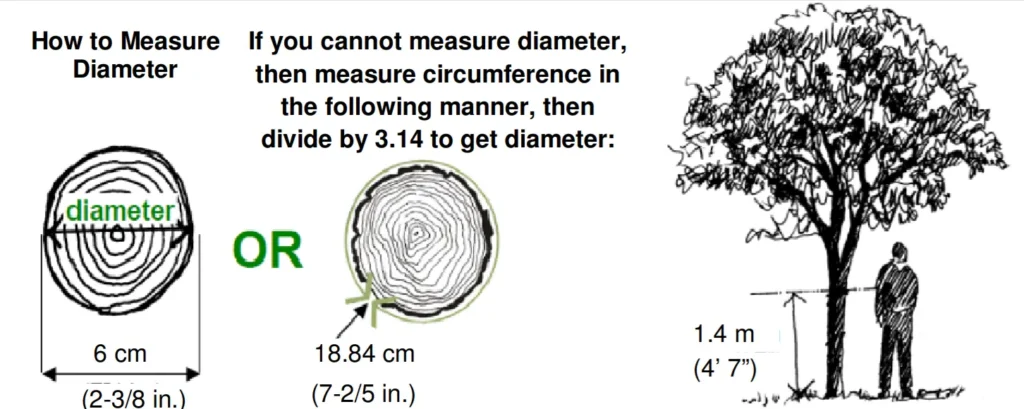
Many homeowners assume that a “tree” only refers to a massive, ancient Douglas Fir. In Nanaimo, the legal definition is shockingly small. Under Bylaw 7126, a tree is defined as any living native or non-native woody plant with a stem diameter of just 6 cm (about 2-3/8 inches) or greater, measured at breast height (1.4 meters off the ground).
If you are clearing out a seemingly overgrown, bushy corner of your backyard, you might technically be cutting down dozens of “regulated trees” without realizing it.
Understanding "Significant Trees"
The biggest legal traps involve trees classified as Significant or Landmark. The city keeps a strict watch on these specific species, and their size thresholds vary wildly.
Landmark Species & Protection Thresholds:
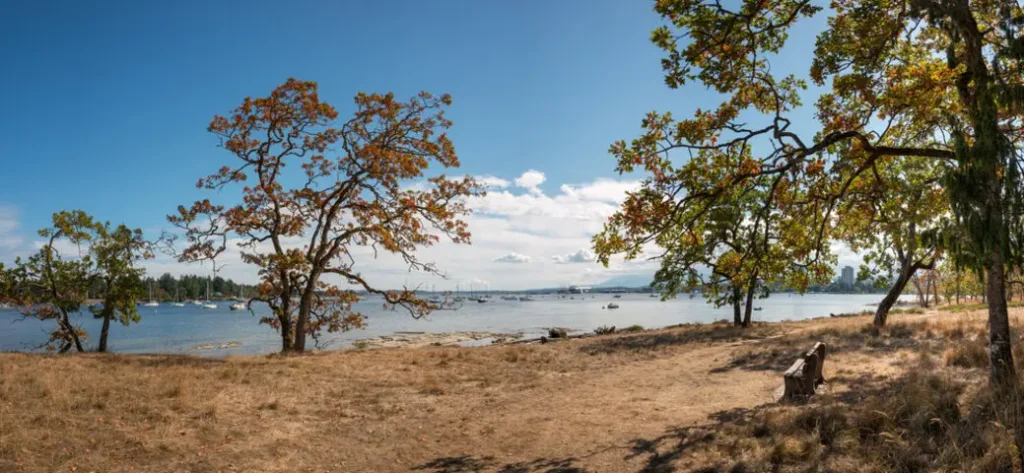
10 cm Trees: Garry Oak, Pacific Dogwood, and Rocky Mountain Juniper are considered protected landmarks when the trunk is just 10 cm wide (roughly the width of a coffee mug).
50 cm Trees: Arbutus and Western Hemlock are heavily protected once they reach a diameter of 50 cm.
80 cm Trees: Douglas Fir, Western Red Cedar, Grand Fir, and Bigleaf Maple must reach 80 cm wide to get landmark designation.
The Risk: Cutting down a Landmark tree or a designated Wildlife Tree (any tree containing an active or historically protected nest for eagles, herons, or osprey) without a specialized permit can expose a property owner to summary conviction fines ranging from $10,000 up to $50,000 per tree.
The 4-Step Bylaw Survival Checklist
If you need to manage problem trees on your property, walk through this quick 4-step checklist to see if you can legally proceed without city hall intervention.
Check the 4-Tree Annual Exemption
An owner of a private residential lot is generally allowed to remove a maximum of four (4) non-significant trees per calendar year without needing a permit. If you stay under this limit and avoid protected species, you are typically in the clear.
Avoid Development & Riparian Zones
The 4-tree annual exemption is immediately void if you have applied for a subdivision or development permit, or if the trees sit inside a designated riparian assessment area (within a setback zone of a stream, lake, wetland, or ditch).
Verify If the Tree Is Truly Dead
Under Section 6(1)(j), you do not need a permit to remove a tree that is completely dead. However, many homeowners often confuse a sick, dormant, or heavily diseased tree for a dead one. If the tree still has living tissue, it requires an arborist’s official hazard assessment.
Document Hazardous Conditions First
If a tree poses an active risk of failure that cannot be solved by pruning, it is classified as a Hazard Tree. While hazardous tree removals are exempt from application fees, the city requires an ISA-Certified Arborist to officially document the hazard to protect you from structural liability claims.
Expert Care You Can Trust
Navigating city bylaws shouldn’t give you a headache. At Neighbourhood Tree Service, we combine over a decade of technical field experience with a deep understanding of Nanaimo’s municipal tree codes. Joe Doran personally evaluates your property to ensure every cut is safe, legal, and compliant—taking the liability entirely off your shoulders.
Official City Resources:
Review the official City of Nanaimo Tree Highlights Brochure for quick reference.
Read the complete, consolidated Management and Protection of Trees Bylaw 7126 for deep legal details.
Frequently Asked Questions
Can I remove a tree if it blocks my ocean or mountain view?
Yes, but only if it falls under the 4-tree annual exemption. If the tree is a non-significant species and you haven’t removed more than 4 trees on your property this calendar year, you are legally allowed to cut it down to clear your view.
However, if the tree exceeds the size limits or belongs to a protected species, you will need to apply for a permit—and Section 11 of the Nanaimo Tree Bylaw explicitly states that the City will refuse permit applications intended solely to maintain or enhance view corridors or to stop a tree from shading private property.
What happens if a tree falls during a severe winter storm?
Emergency removal of a hazardous tree or fallen branches following a severe weather event is permitted immediately without a prior permit. However, the property owner must notify the City within 48 hours of the removal and may be required to plant a replacement tree depending on the tree’s size.
If I am forced to get a permit, what are the cleanup rules?
When a tree permit is approved, Nanaimo bylaws state that all cut materials, brush, and logs must be fully cleaned up and removed, leaving the site safe within 30 days of completing the work.
Conclusion
Don’t risk a massive municipal fine or property damage by guessing on local regulations. Let a professional handle the technical evaluation for you.
Joe will give you an honest, transparent breakdown of your property’s trees, telling you exactly what is exempt, what is optional, and what requires formal city sign-off.
Call Joe today at (250) 668-2352.