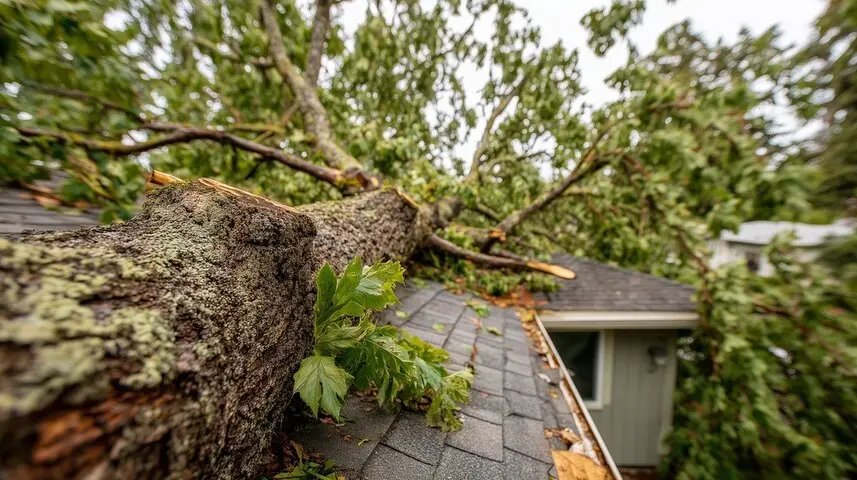
Why Fall Storms Hit Central Vancouver Island Trees Harder
- Soil Saturation vs. Shallow Bedrock: Prolonged rainfall quickly saturates topsoil, softening the root plate. Because many coastal Douglas firs and Grand firs grow over shallow Island bedrock, saturated soil drastically reduces root-holding stability.
- The Sail Effect in Early Windstorms: In early fall, deciduous trees often still retain their leaves, and evergreen conifers are laden with heavy rainwater. When the first 60–80 km/h southeast gales hit the Strait of Georgia, dense canopies act like giant ship sails, catching wind instead of letting it pass through.
Visual Hazard Identification
Walk your property line this week and inspect mature trees from the soil line up to the crown. Watch for these five critical warning indicators:
1. Ground Heaving & Root Plate Cracking
Look around the base of the trunk on the side opposite the lean. If you notice freshly cracked soil, mounded turf, or severed surface roots after rain, the root plate is actively lifting. This is a red-alert indicator of imminent windthrow.
2. Hanging Widowmakers & Canopy Dieback
Broken, unattached limbs wedged in the upper canopy (commonly called widowmakers) will break free during the first autumn windstorm. Similarly, large dead tops indicate internal decay and should be removed before they snap.
3. V-Shaped Co-Dominant Trunks with Included Bark
Trees with two competing main trunks that form a tight “V” shape often lack strong continuous wood grain at the union. As bark pinches inside the seam (included bark), fall wind gusts twist the two stems apart, frequently shearing one half directly onto structures below.
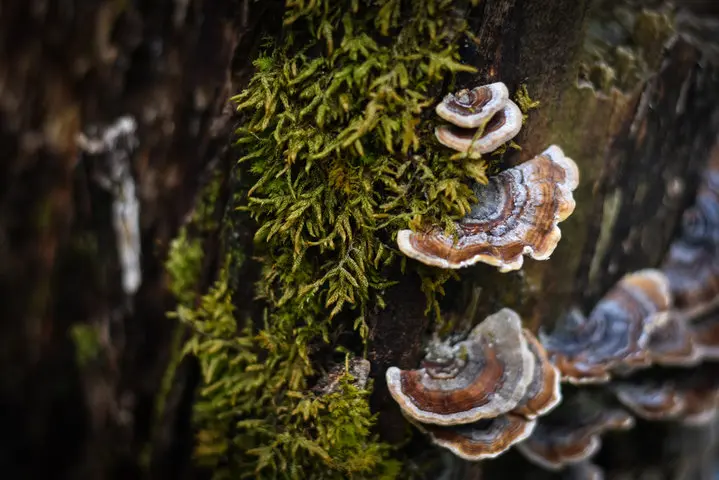
4. Conks, Mushrooms, and Fungal Fruiting Bodies
Fungi growing directly out of the root flare, trunk base, or lower limbs indicate active internal wood rot. Wood that feels solid to a surface knock may be hollowed or sponge-like inside.
5. Sudden Unnatural Lean
Trees naturally grow with odd curves toward sunlight, but a sudden lean can mean structural anchor roots have failed.
Proactive Pruning vs. Emergency Removal: What Can Be Saved?
Not every tree that leans or catches the wind needs to come down. In fact, most structurally sound trees can be safely preserved through targeted care.
Here is how we balance tree health with structural safety:
Canopy Thinning & End-Weight Reduction: By selectively pruning secondary branches, we can reduce the canopy’s wind resistance. This lets heavy wind move freely through the branches without stressing the primary trunk. Learn how targeted tree pruning in Nanaimo restores storm resilience.
Dead Wooding: Removing dead or fractured limbs eliminates the falling debris that damages gutters, cars, and roofing during minor gusts.
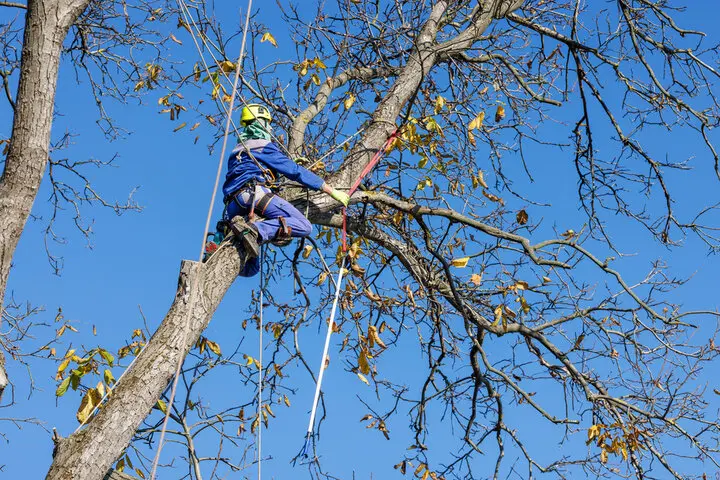
Controlled Hazard Removal: When root rot or split trunks make a tree too dangerous to retain near a residence, precision rigging allows us to dismantle the tree section-by-section without damaging surrounding landscaping. There’s a reason the old Arborist slogan “Small Piece, Small Problem” exists. Explore our low-impact tree removal in Nanaimo solutions.
The Nanaimo Homeowner Fall Storm Prep Checklist
While we recommend contacting a professional arborist for assessing tree hazards and any pruning that requires specialized tools and safety equipment, you can follow this quick checklist to prepare.
1. Schedule an Early-Fall Canopy Audit
Inspect clearance around rooflines, chimneys, service wires, and outbuildings before heavy November winds begin.
2. Reduce Branch End-Weight
Prune overextended limbs overhanging living spaces or driveways to mitigate leverage strain.
Check Boundary Trees with Neighbours
Inspect shared trees along property fences and document existing hazards collaboratively.
4. Keep Emergency Contacts Ready
Save direct contact info for an ISA Certified Arborist with round-the-clock storm response before power outages hit.
ISA Certified Hazard Mitigation in Nanaimo
When severe storms strike Vancouver Island, you need more than someone with a chainsaw. Joe Doran is an ISA Certified Arborist equipped with heavy rigging systems and full commercial liability insurance to safely dismantle wind-damaged trees in confined spaces.

Nanaimo Bylaw Nuance for Urgent Hazards
Under the City of Nanaimo Tree Protection Bylaw, permits are generally required before cutting down protected trees. However, Section 7 of the bylaw provides an explicit exemption for imminent hazards—where a tree poses an immediate danger to human life or property.
To utilize this exemption safely without risking municipal fines:
Clear photographic evidence of the imminent failure must be documented prior to cutting.
An ISA Certified Arborist should perform the risk evaluation to verify and substantiate that the tree posed an immediate threat.
If a tree does not pose an immediate crisis, standard bylaw rules apply. For full details on trunk diameter thresholds and protected trees, read our Nanaimo Tree Removal Bylaws Practical Guide.
Frequently Asked Questions About Storm Tree Prep
Can pruning a tree in the fall harm its health?
Fall is the best time to prune trees, as they are preparing to go dormant for the winter. Structural pruning, hazard reduction, and dead wooding are safe to perform in early to mid-autumn across Vancouver Island. Removing dead or structurally compromised wood poses zero risk of shocking the tree and prevents catastrophic tear-outs.
What should I do if a tree falls on my home or power lines?
If power lines are affected, stay at least 10 meters (33 feet) back and call BC Hydro (1-800-BCHYDRO) and 911 immediately. Once the site is electrically secured, call our 24/7 emergency tree removal team at (250) 668-2352 to stabilize and rig the fallen trunk away from your roofline.
How much does a pre-storm hazard tree inspection cost?
Joe provides transparent, honest property assessments across Nanaimo, Lantzville, and Ladysmith. We evaluate tree stability, discuss preventative options, and provide zero-obligation estimates for any recommended work.
Protect Your Home Before the First Big Windstorm
Don’t wait for a midnight gale to discover which trees on your property are compromised. An hour of preventative tree care today protects your family and can save thousands in insurance deductibles tomorrow. Give us a call at (250) 668-2352